Stop Selling Features: Use Hybrid Security to Close Enterprise Deals Faster
Why betting only on AI security is risky (and why that helps you grow)
Most companies treat AI-driven code audits as the finish line. Lorikeet Security’s Flowtriq case study shows that’s backwards: AI audits close many source-level bugs, but manual pentesting still uncovers high-impact runtime, configuration, and infrastructure gaps. Bottom line — combining AI-assisted review with practitioner-led pentesting converts defensive tooling into measurable business advantage by reducing breach likelihood, enabling faster compliance, and improving product trust.
The Business Case
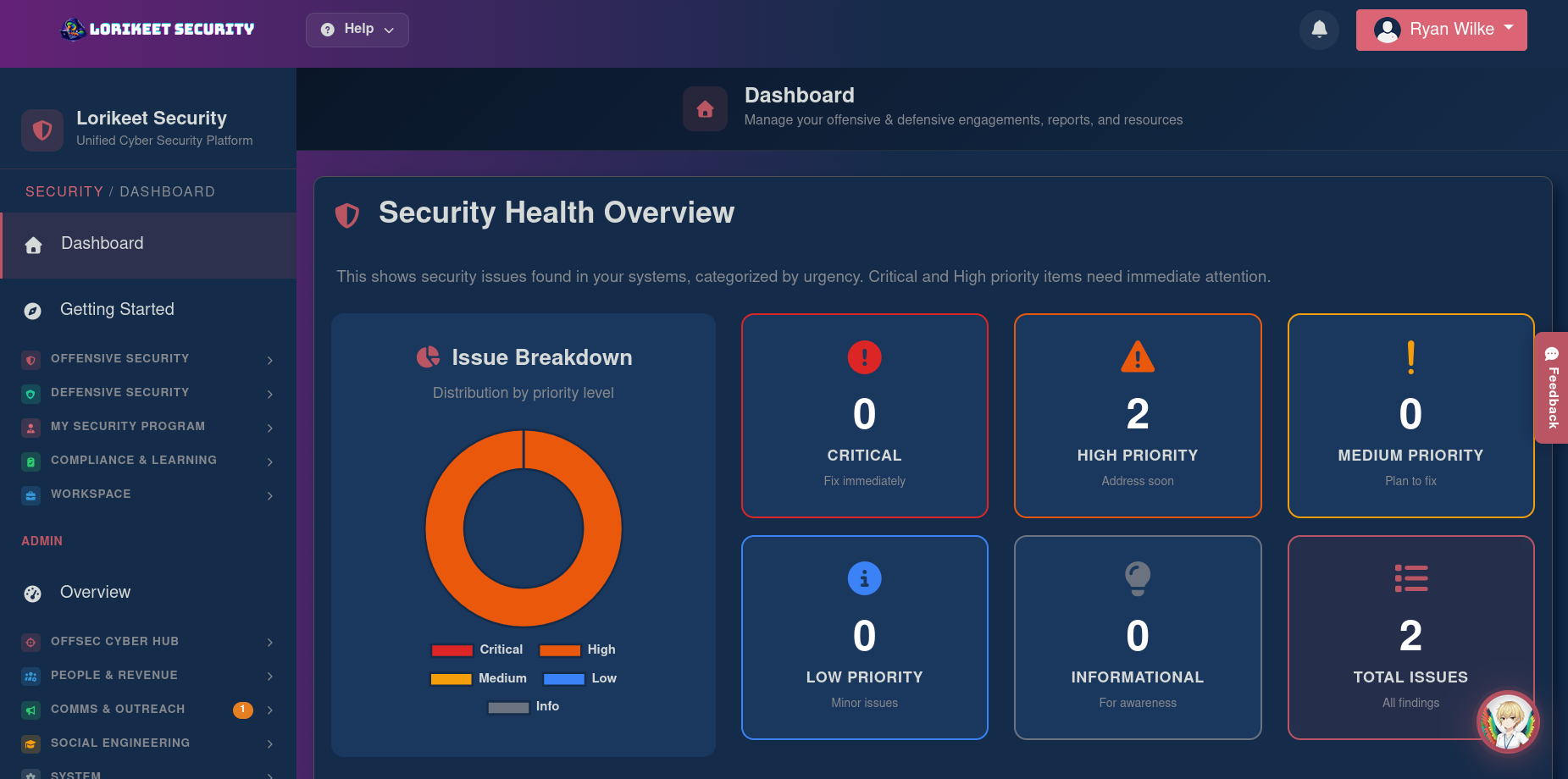
We reviewed Lorikeet’s findings and the broader pattern across our client base and see a clear ROI narrative. When Flowtriq ran a Claude-driven AI audit, it removed common code-level issues (XSS, SQLi, template injection, weak crypto) that would otherwise consume developer cycles and remediation budgets. Lorikeet’s subsequent manual pentest still identified five additional issues (two High) in session management, TLS posture, file-system hygiene, and reverse-proxy headers — areas AI auditing structurally misses.
For marketing leaders, this translates into four business outcomes: fewer public incidents (protecting brand equity), faster time-to-market (less firefighting for engineering), stronger compliance posture for sales into regulated verticals (HIPAA, PCI-DSS, FedRAMP), and a differentiated trust signal for enterprise buyers. Quantitatively, avoiding even a single high-severity incident can save millions in direct costs and far more in lost ARR from churn and reputational damage. We’ve seen security validation reduce sales friction in healthcare and fintech deals — a direct contributor to revenue acceleration.
Key Strategic Benefits
- ├─Operational Efficiency: Combining AI audits with Lorikeet’s manual pentesting focuses developer time on remediations that matter. We’ve seen teams reduce low-signal findings by >50%, so engineers can prioritize runtime/config fixes that block deals.
- ├─Cost Impact: Fewer escalations and shorter remediation cycles lower SRE and incident-response spend. Preventing one critical incident pays for multiple pentest cycles and strengthens renewal rates with enterprise clients.
- ├─Scalability: A PTaaS model with continuous Attack Surface Management and SOC-as-a-Service scales with product growth, letting security validation keep pace as you add APIs, mobile clients, and cloud environments. It integrates into CI/CD pipelines to preserve velocity.
- ├─Risk Factors: Don’t over-index on AI: it creates a false sense of security for runtime/config issues. Watch for integration gaps between PTaaS portals and developer workflows, and ensure vendor coverage aligns with your compliance matrix (SOC 2, HIPAA, PCI-DSS, HITRUST, FedRAMP).
Implementation Considerations
Our team recommends a phased approach: start with an AI-driven code audit as a low-friction, high-signal filter, then schedule a targeted manual pentest focused on runtime, infra, and configuration risks. Expect a pilot cycle of 4–8 weeks (AI pass + follow-up manual pentest + remediation verification). Required resources: product engineering leads, security champions, and executive sponsorship to prioritize fixes discovered in production. Integration needs: connect the PTaaS portal to your issue tracker, CI/CD pipeline, and alerting systems so findings become actionable tickets with SLAs. Change management: communicate to sales and legal teams that combined validation reduces customer security concerns and accelerates contract negotiations. Finally, treat continuous Attack Surface Management as an operational feed — not a one-off audit — and budget for recurring engagements as part of your product risk management lifecycle.
Competitive Landscape
Lorikeet sits between platform-first crowdsourced offerings and large consultancy models. Compared to Cobalt, Synack, and Bugcrowd (crowdsourced/managed pentest platforms), Lorikeet emphasizes practitioner-led manual testing tuned for AI-native dev patterns rather than sheer scale of testers. Against boutique consultancies and Big Four firms (Deloitte, PwC), Lorikeet is faster to execute, developer-friendly through a PTaaS portal, and positioned for continuous operations (ASM, SOC-as-a-Service, vCISO). Traditional vulnerability scanners and AI tools like Copilot, Claude, or Cursor close source-level holes but don’t see runtime edge cases — that’s where Lorikeet’s manual testing demonstrates disproportionate value. For teams selling into regulated buyers, the combinatory model (AI + manual + continuous monitoring) is increasingly the de facto bar for risk acceptance.
Recommendation
We recommend piloting a combined AI audit + Lorikeet manual pentest on a high-risk product path (API or authentication flow). Action steps: (1) run an AI-driven code scan immediately; (2) schedule a 4–8 week manual PTaaS engagement focused on runtime/configuration; (3) integrate the PTaaS portal with your ticketing and CI/CD; (4) brief sales/legal on validated findings to shorten enterprise procurement. We’ve found this sequence reduces remediation cycles and materially lowers buyer friction — a pragmatic lever for growth.