Is Fathom the Privacy-First Analytics Tool Marketers Actually Need?
Engineering Financial Intelligence: Inside Fathom's Analytics Engine
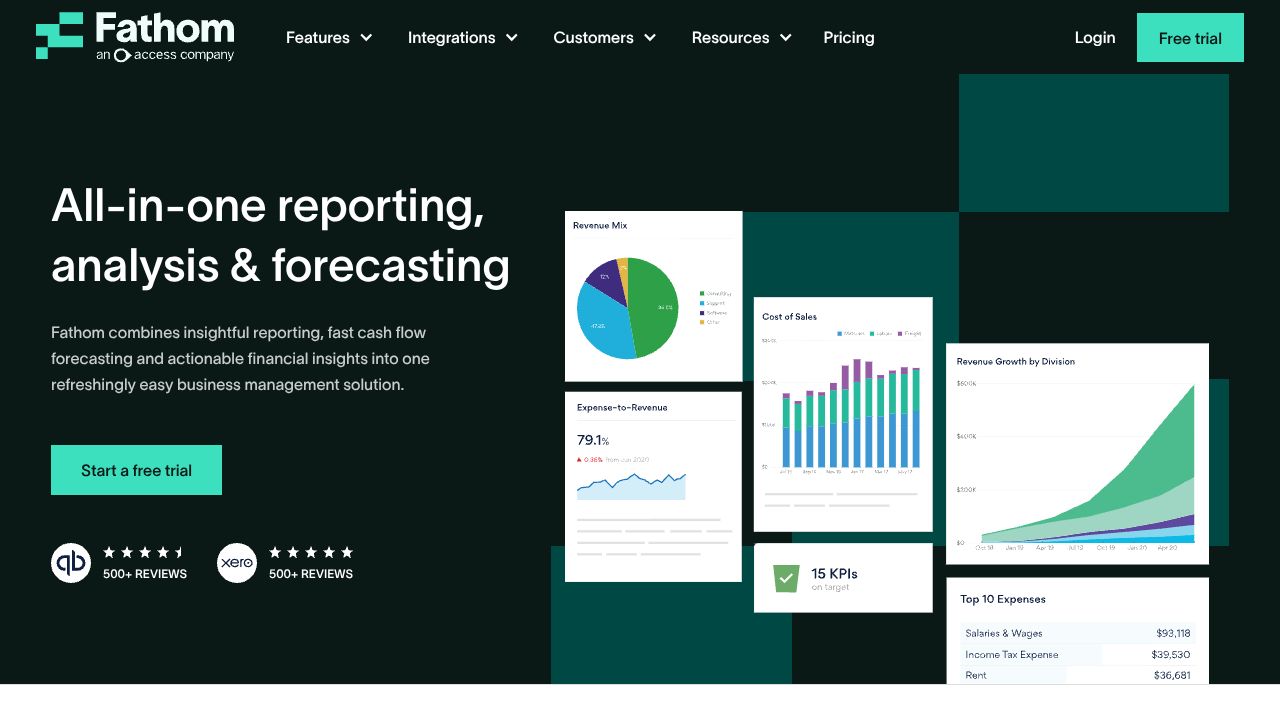
According to recent McKinsey research, companies leveraging advanced financial analytics see a 25% improvement in forecast accuracy and a 15% reduction in reporting time. Fathom sits at this intersection of financial technology and business intelligence, built on a modern microservices architecture that processes multi-currency financial data at scale. The platform's core is designed around three primary components: a data ingestion layer that handles multiple accounting system integrations, an analytics engine for real-time calculations, and a presentation layer delivering customizable reports.
Architecture & Design Principles
Fathom employs a distributed architecture optimized for handling complex financial calculations across multiple entities. The platform is built on a containerized infrastructure, allowing for seamless scaling as data volumes grow. Its event-driven architecture enables real-time updates when source accounting data changes, while maintaining consistency across consolidated reports.
Key architectural decisions include:
- ├─Separation of computation and storage layers for independent scaling
- ├─Asynchronous processing for heavy consolidation operations
- ├─In-memory caching for frequently accessed financial metrics
- ├─Multi-tenant design with strict data isolation
Feature Breakdown
→ Core Capabilities
- ├─Financial Data Pipeline: Implements Extract-Transform-Load (ETL) processes with built-in validation rules and automated reconciliation checks
- ├─Consolidation Engine: Uses parallel processing to handle multi-currency conversions and inter-company eliminations in real-time
- ├─Report Generation System: Leverages a template engine with custom rendering logic for unlimited brandable outputs
→ Integration Ecosystem
The platform provides REST APIs with OAuth 2.0 authentication, supporting both push and pull data synchronization. Native connectors exist for major accounting platforms including Xero, QuickBooks, and MYOB. Custom webhooks enable real-time data updates, while the API supports rate limits of 1000 requests per minute for enterprise clients.
→ Security & Compliance
Fathom maintains SOC 2 Type II compliance and implements AES-256 encryption for data at rest. The platform features:
- ├─Role-based access control (RBAC)
- ├─Multi-factor authentication
- ├─Regular penetration testing
- ├─GDPR and CCPA compliance measures
Performance Considerations
The platform achieves sub-second response times for most operations through:
- ├─Distributed caching layer using Redis
- ├─Optimized database queries with materialized views
- ├─CDN integration for static assets
- ├─Automatic database query optimization
How It Compares Technically
While Fathom excels in multi-entity consolidation and reporting flexibility, its technical architecture differs from alternatives in several ways:
- ├─More robust multi-currency support compared to simpler reporting tools
- ├─Stronger focus on scalability versus single-instance solutions
- ├─More comprehensive API coverage for integration scenarios
Developer Experience
Fathom provides extensive API documentation with interactive Swagger specifications. The developer portal includes:
- ├─Comprehensive SDK support for major languages
- ├─Detailed implementation guides
- ├─Active developer forum
- ├─Regular technical webinars
Technical Verdict
Fathom's technical architecture shines in scenarios requiring complex financial consolidation and analysis at scale. Its microservices approach and robust API ecosystem make it particularly suitable for enterprises with diverse integration needs. While the learning curve is steeper than simpler alternatives, the platform's technical depth supports sophisticated financial analysis workflows that would be difficult to replicate with less specialized tools.
The main technical limitations revolve around the complexity of initial setup and the need for careful performance tuning when handling large data volumes. However, for organizations requiring enterprise-grade financial analysis capabilities, these tradeoffs are well justified by the platform's comprehensive feature set and scalable architecture.